
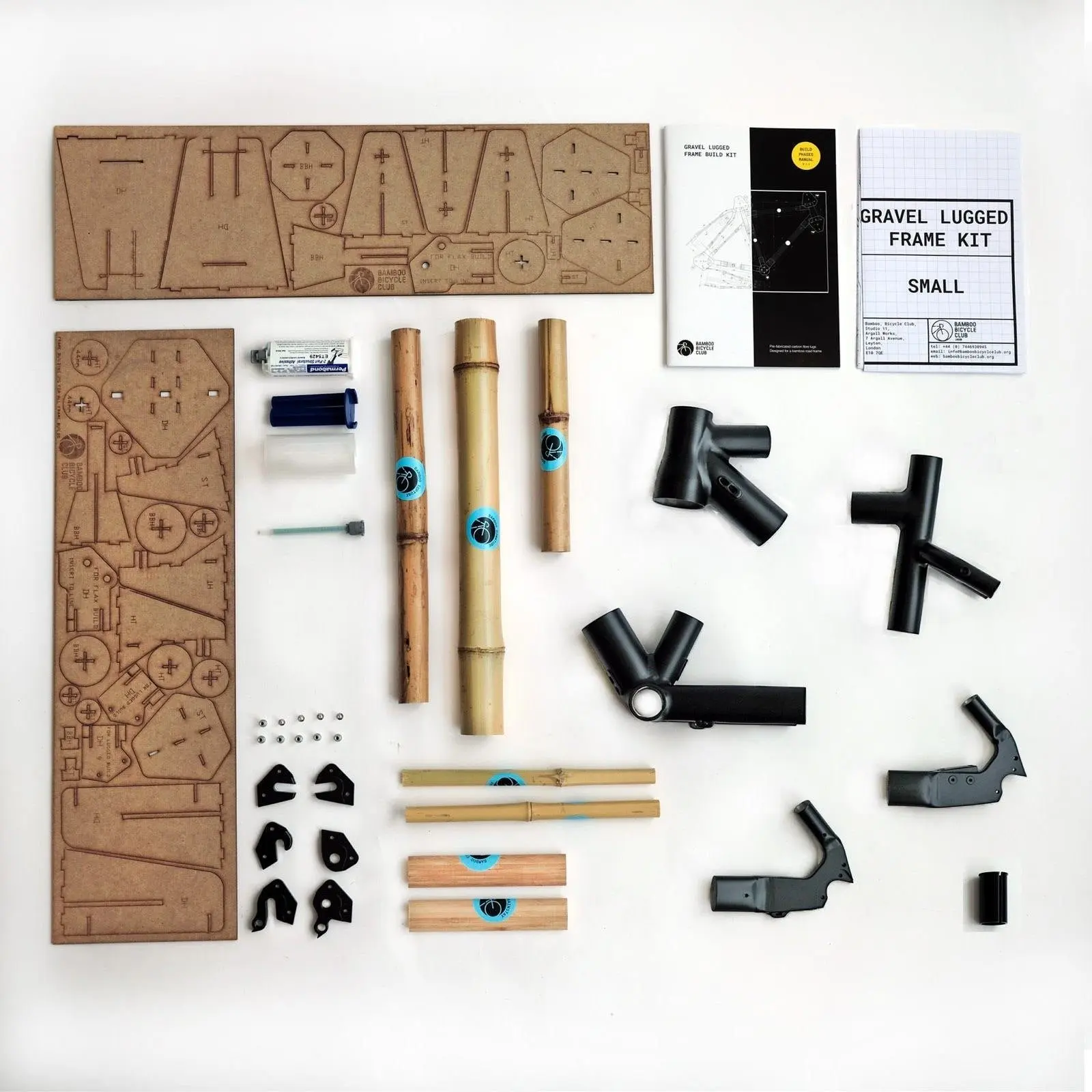
On 9 June 2026 we ran an in-person design sprint at Surrey Research Park for 30 University of Surrey students, with We Job Box. One week after our applied psychology session at Aston, and a completely different discipline, which is rather the point.
The opening claim was deliberately blunt: most teams build the right answer to the wrong question.
Staying in the problem
The session used the Double Diamond, and deliberately only its first half. Teams are almost always desperate to jump to a solution; this workshop refused to let them. Four steps, in order:
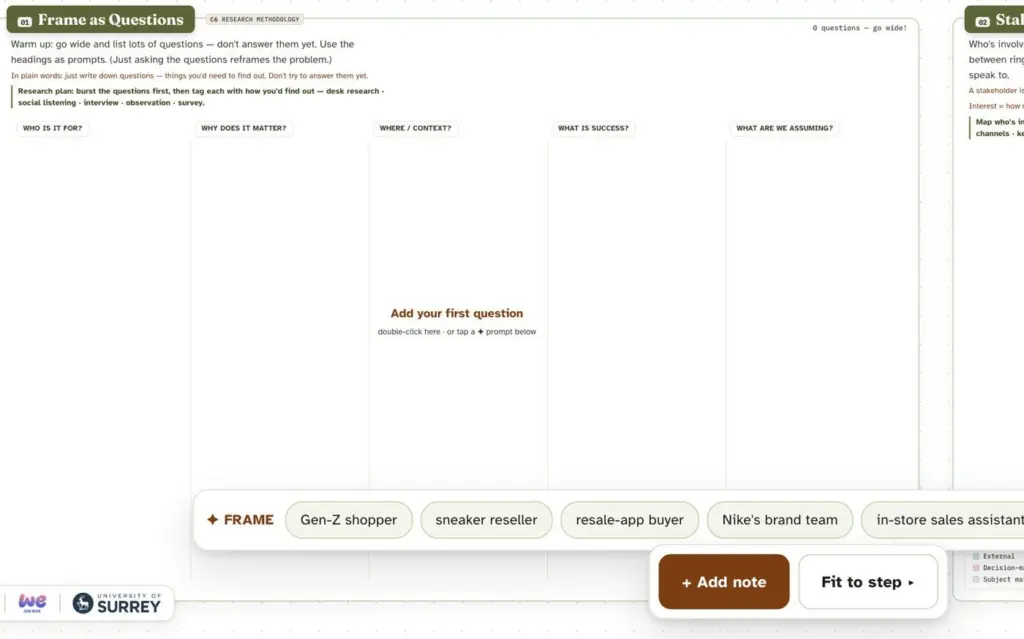
- Frame it as questions: what do we actually need to find out?
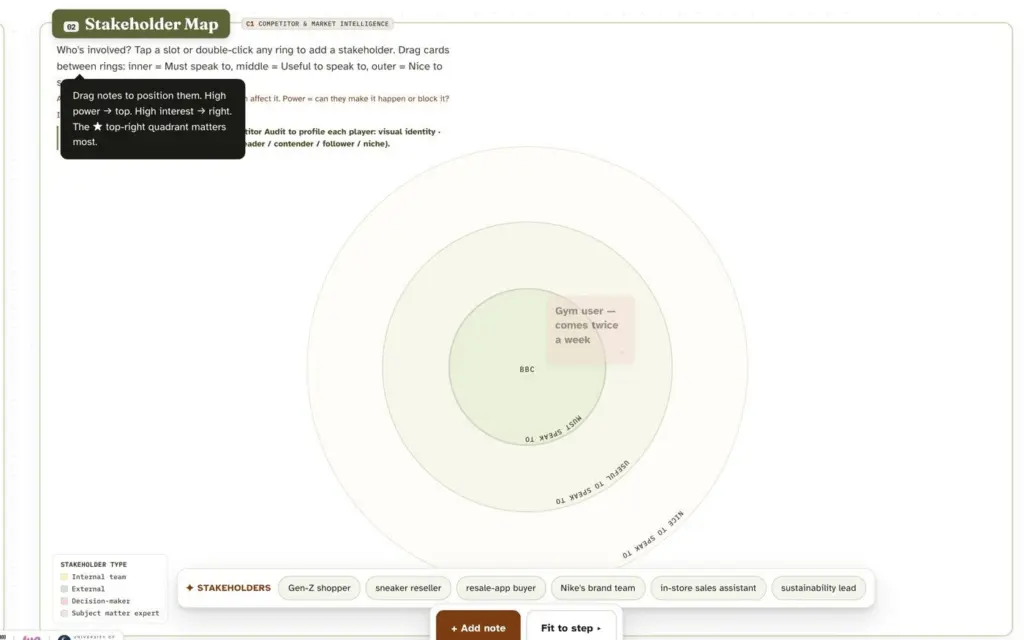
- Map who’s involved: who are the people in this problem?
- Walk their experience: go through it as one of them, step by step
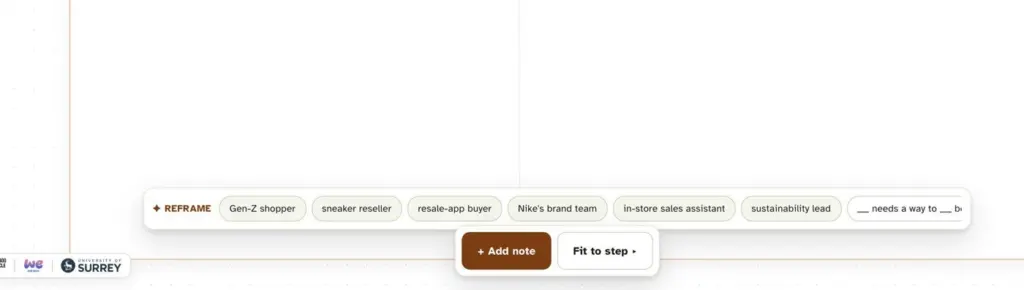
- Reframe the problem: turn all of that into one sharp “How might we…?”
Only then does anyone get to talk about answers. Each team closed with a three-minute share-out, three speakers, covering the challenge and its stakeholders, what they learned from walking someone’s experience, and the reframed problem.
Ten minutes, ten minutes, fifteen, ten
Ninety minutes, four zones, worked strictly in order: roughly ten minutes asking questions, ten mapping stakeholders onto three rings by how important they are to speak to, fifteen walking one person’s journey through what they do, think and feel, and ten to land the reframe. Teams had a worked example to steer by: a discovery problem framed around a habitual music-streaming listener who opens the app after a long day, finds the recommendations feel like homework, taps their saved songs instead, and thinks “I should explore more” but doesn’t.
The debrief asked three questions: what surprised you about the people in the brief, what did walking one person’s experience show you, and how did your reframe shift from the original?
The challenge
One of the briefs asked why so many Gen Z consumers now buy second-hand trainers, a question that turns out to contain sustainability, consumer behaviour and business-model design all at once, and which nobody can answer honestly without thinking about the people doing the buying.
The tool
As at Aston, we built the tool for the day: a shared Design Thinking Board that each team worked on together, with worked examples and a feedback form. Teams work on one screen rather than five, which keeps the conversation in the room.
One reply
“I was inspired by Bamboo Bicycle Club’s approach to sustainability, product development, and entrepreneurship… I would welcome the opportunity to contribute while learning more about sustainable product design, innovation, and business operations.”
University of Surrey undergraduate, writing the day after the session to ask about a placement
That is one message from one student the day after the session, and we do not read wider impact into it.
The closing slide put it as plainly as we know how: design thinking is a skill, not a personality. Frame first, solve second: the quality of your question determines the quality of your answer.
It was the fourth workshop we have delivered with We Job Box, and the second built around a purpose-made digital tool rather than a kit. If you run a university module, an accelerator or an employability cohort and want a session built on a real problem, see how our programmes work.
Part of our work with We Job Box: the green day challenge (Oct 2025) · sustainability & entrepreneurship (Feb 2026) · applied psychology at Aston (Jun 2026) · a design sprint with the University of Surrey (Jun 2026).